
Tri Hita Karana: the Balinese philosophy behind everyday life
Three harmonies — with God, with people and with nature — shape Balinese villages, temples, rice fields and even how a family house is laid out. Here is how to recognise Tri Hita Karana on your trip.
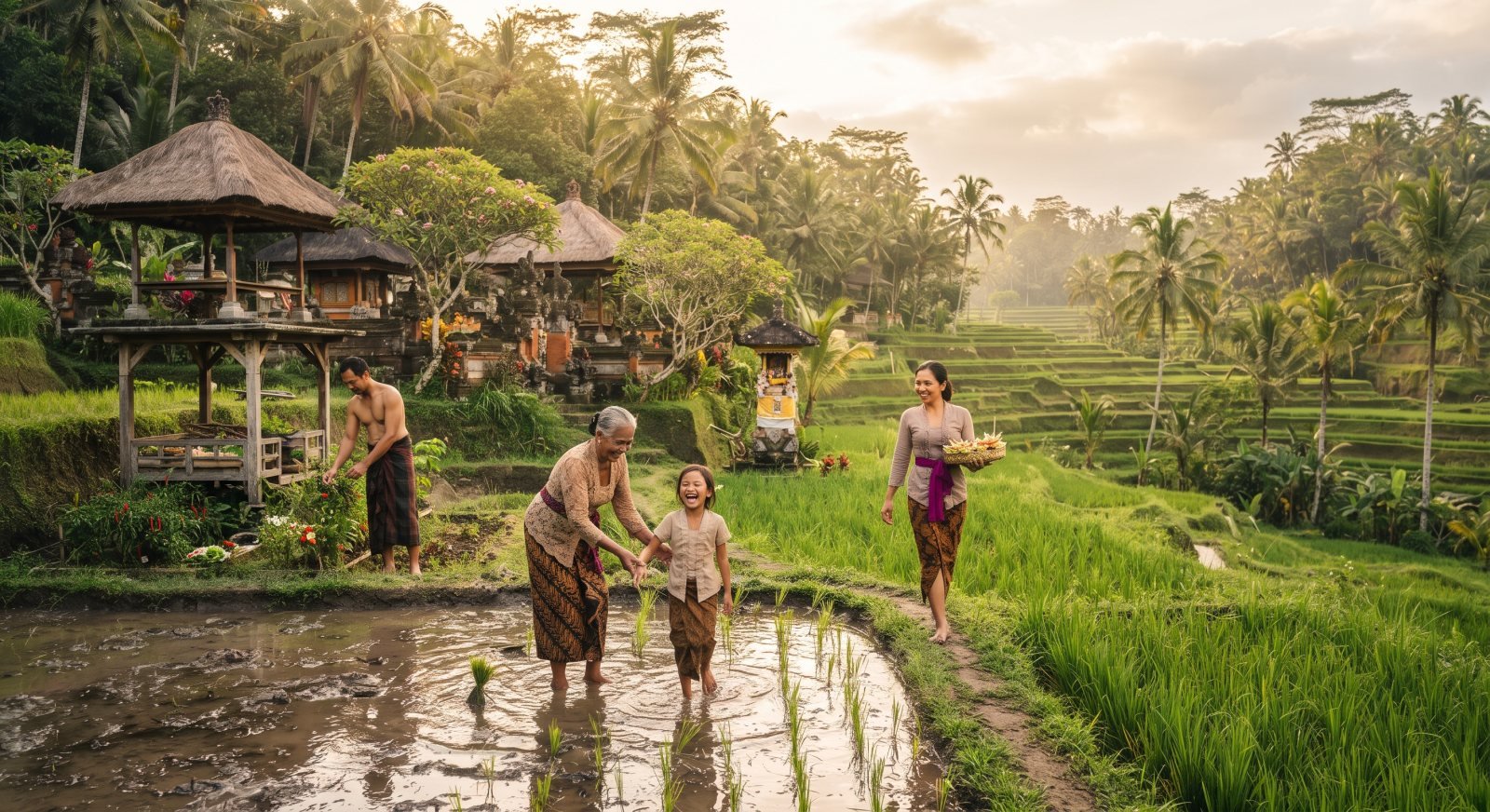
Spend a morning in any Balinese village and you will see a woman placing small offerings on a doorstep, men repairing the village hall together, and a farmer opening a water gate in the rice field. These scenes look unrelated, but the Balinese explain all three with one idea: Tri Hita Karana, the "three causes of well-being".
The three harmonies
The phrase comes from Sanskrit: tri (three), hita (happiness, prosperity) and karana (cause). Life is good when three relationships are kept in balance:
- Parahyangan — harmony between people and God (Ida Sang Hyang Widhi Wasa) and the ancestors. This is the daily offering, the temple festival and the prayer before a journey.
- Pawongan — harmony among people. Balinese life is organised around the banjar, a neighbourhood council where families share work for weddings, cremations and ceremonies.
- Palemahan — harmony with nature and the land. Forests around temples are protected, rivers are blessed, and rice farmers share water fairly.
None of the three is enough alone. A beautiful temple in a polluted village, or a rich village where neighbours do not help each other, is considered out of balance.
Where you will see it on your trip
In the family compound
A traditional house is not one building but a walled compound. The family temple (sanggah or merajan) sits in the most sacred corner, toward Mount Agung (kaja). Living pavilions are in the middle, and the kitchen and rubbish area face the sea or the lowlands (kelod). Every compound is a small map of the three harmonies.
In the rice terraces
The subak irrigation system, recognised by UNESCO in 2012 as the "Cultural Landscape of Bali Province: the Subak System as a Manifestation of the Tri Hita Karana Philosophy", is the clearest example. Water flows from crater lakes through water temples to farmers, who meet to agree on planting schedules. A temple priest, the farmers' association and the water itself are all part of one system. You can walk through it on our Kintamani, Tirta Empul & Ubud tour.
In the temple festival
Every temple celebrates its anniversary, the odalan, every 210 days. The whole banjar cooks, decorates and dances together — parahyangan and pawongan at once. If your driver slows down for a procession of women carrying fruit towers on their heads, you have found one.
What it means for visitors
Tri Hita Karana is not a museum idea; it is why Bali asks visitors to behave in certain ways:
- Step around offerings on the pavement, and never step on them on purpose.
- Dress respectfully at temples: shoulders and knees covered, with a sarong and sash. Our drivers carry spares.
- Respect the land: do not climb sacred trees, temple walls or shrines for photos, and take your rubbish with you. Bali's governor has asked visitors to avoid single-use plastic; a refillable bottle helps.
- Ask before photographing people at prayer, and keep a little distance during ceremonies.
A philosophy for business too
Many Balinese companies — including ours — use Tri Hita Karana as a guide: fair pay and respect for drivers and partners (pawongan), honest service to guests, and tours that leave villages and beaches cleaner than we found them (palemahan). The Bali provincial government also uses the concept in its tourism and environmental policies, and you will see the name on hotel awards and village notice boards.
In short: when something in Bali looks like a ritual, it is usually a small act of keeping three relationships in balance.
Experience it respectfully
The best way to understand the philosophy is to see it with a local guide who can explain what is happening. Our private drivers speak English and can stop at village temples, water temples and rice terraces on the way — just ask. Questions? Tap Ask Eka at the bottom of the page.
General information, reviewed periodically. Rules and prices in Bali change — check official sources before you travel or invest.
Keep reading
All articles →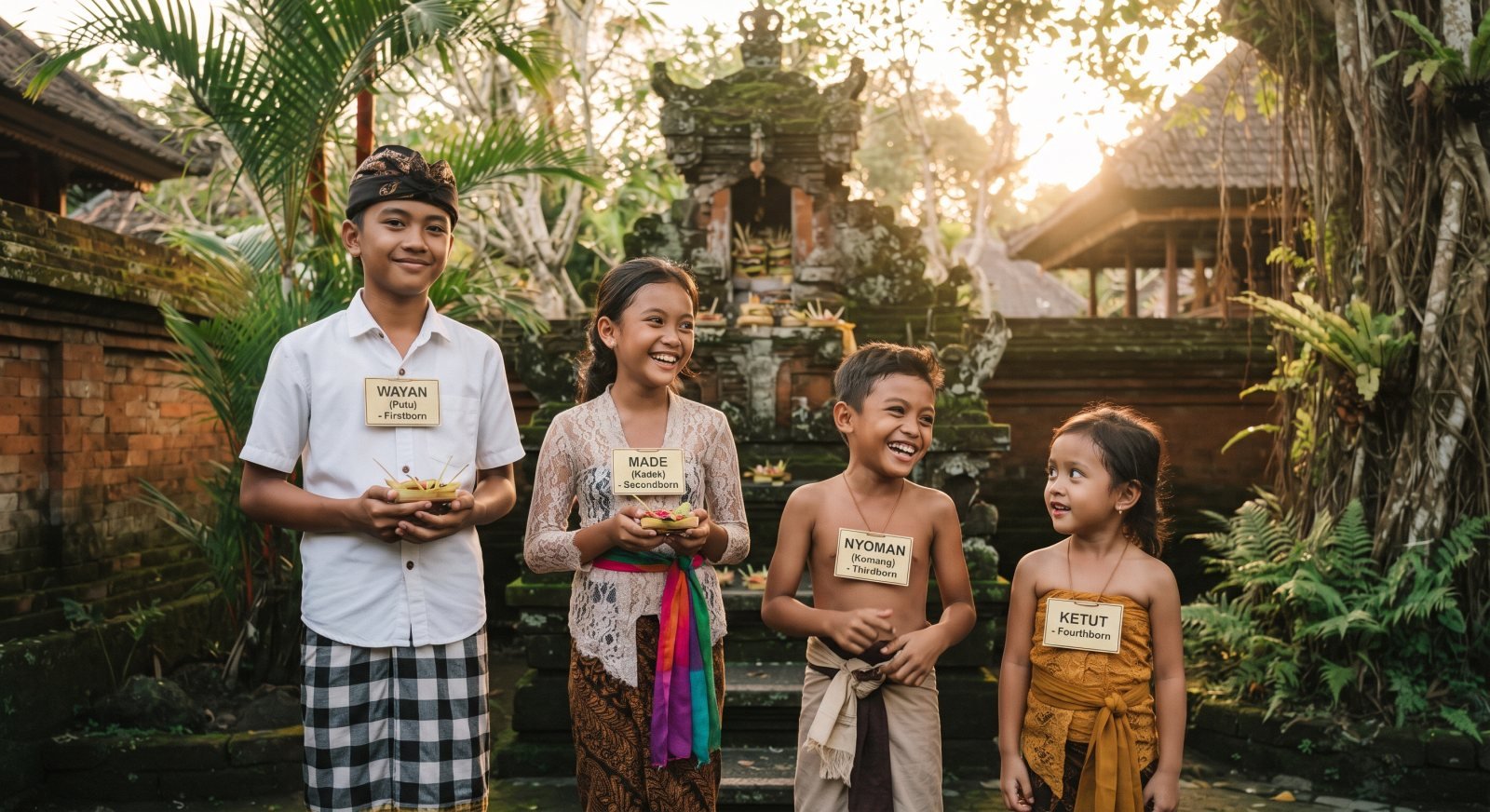 Local Life & Philosophy
Wayan, Made, Nyoman, Ketut: how Balinese names work
Why do so many Balinese share the same four names? A friendly guide to birth-order names, caste titles and how to address your driver polit…
 Tourism Trends & News
Peta dan arah pariwisata Bali ke depan: data 2025, tren ekonomi, sosial dan budaya
Kunjungan wisman langsung ke Bali mencapai 6,95 juta pada 2025, naik 9,72%. Bagaimana peta pariwisata Bali bergeser, apa dampaknya bagi eko…
 Tourism Trends & News
Bali tourism in numbers: 2025 results and where the island is heading
Bali welcomed almost 7 million foreign arrivals in 2025, nearly 10% more than 2024, plus over 26 million domestic trips. Who is coming, wha…