
Wayan, Made, Nyoman, Ketut: how Balinese names work
Why do so many Balinese share the same four names? A friendly guide to birth-order names, caste titles and how to address your driver politely.
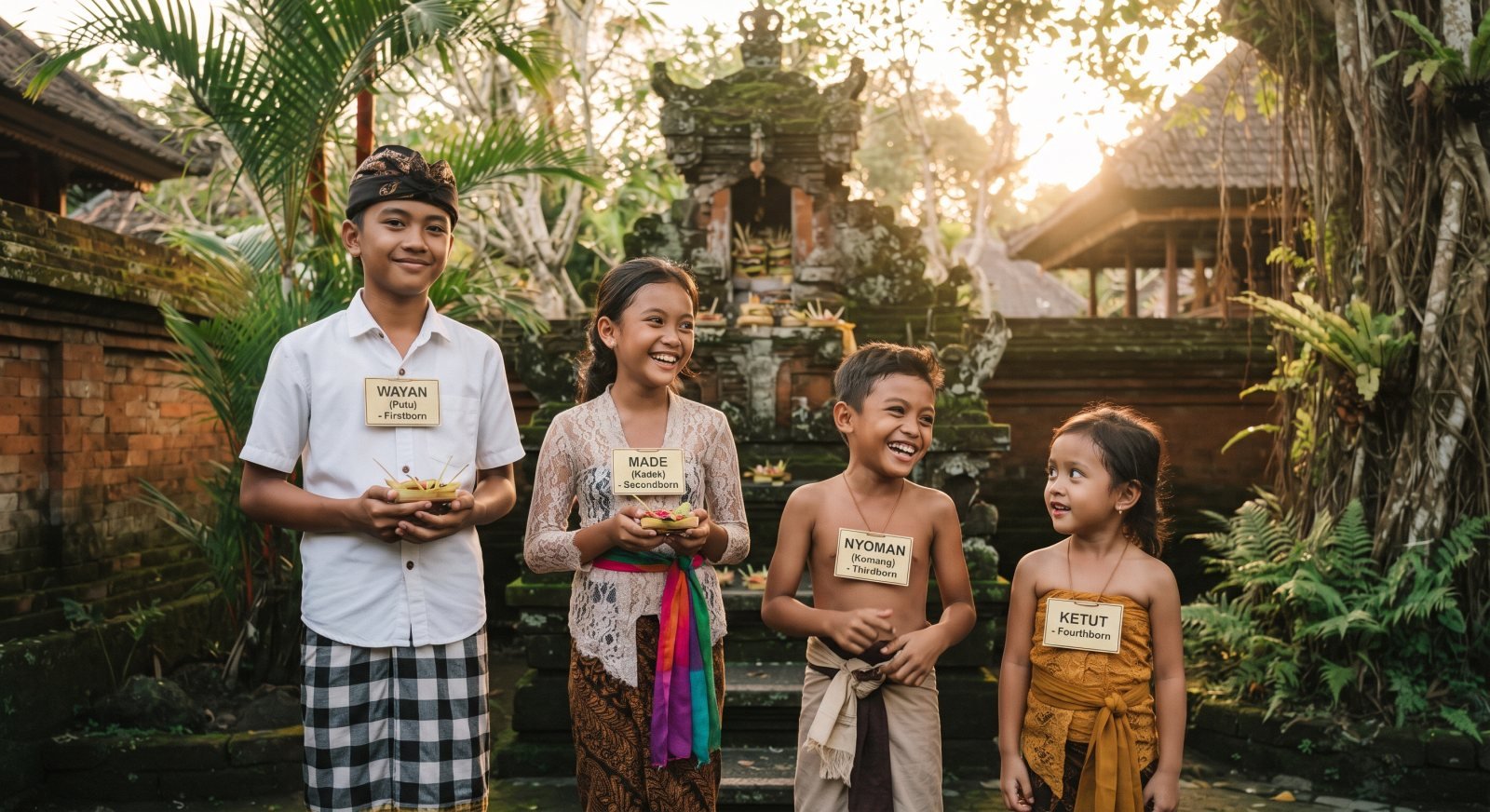
On your first day in Bali you may meet a driver called Wayan, a waiter called Made, a guide called Nyoman and a shop owner called Ketut. It is not a coincidence. Most Balinese Hindus carry a birth-order name that tells you whether they were the first, second, third or fourth child in the family.
The four birth-order names
| Order | Common names | Meaning (roughly) |
|---|---|---|
| 1st child | Wayan, Putu, Gede | "eldest", "grandchild", "big" |
| 2nd child | Made, Kadek, Nengah | "middle" |
| 3rd child | Nyoman, Komang | "last" (in older usage) |
| 4th child | Ketut | "little one", "banana's last shoot" |
The fifth child starts again at Wayan — sometimes called Wayan Balik ("Wayan again") — and the cycle repeats. Different regions and families prefer different variants: Putu is popular in many towns, Gede is often used for boys, and Kadek and Komang are common among younger generations.
I and Ni: male and female
Before the birth-order name you will often see I for males and Ni for females on ID cards and invitations, for example I Wayan Sudarma or Ni Made Ayu. In daily speech the prefix is usually dropped.
Caste titles
Bali has a traditional title system linked to the four warna. About nine in ten Balinese belong to the Sudra (also called jaba) group and use the birth-order names above. The other groups carry titles:
- Brahmana: Ida Bagus (men), Ida Ayu (women)
- Ksatria: Anak Agung, Cokorda, Dewa, Desak
- Wesia: Gusti, I Gusti Ngurah, Gusti Ayu
Today the titles are mostly about family heritage and ceremony roles; in business and daily life everyone works side by side. It is polite to use a person's title if they introduce themselves with it.
The "real" name comes after
Because many people share Wayan or Made, the personal name that follows is what makes someone unique: Wayan Sudarma, Made Ari, Ketut Liyer. Friends often use a nickname taken from it. When in doubt, ask: "What do you like to be called?" Balinese people are used to the question and usually enjoy explaining.
How to address people politely
- Use Pak (sir) or Bu/Ibu (madam) before the name for adults: Pak Wayan, Bu Made.
- Use Bli (older brother) or Mbok (older sister) in friendly, informal Balinese settings — many guides will invite you to.
- Avoid touching anyone's head, including children's; the head is considered the most sacred part of the body.
- Give and receive things with your right hand.
Why it matters on a tour
Knowing the system turns small talk into a real conversation. Ask your driver whether he is the eldest or the youngest, which village he comes from, and when his temple's next odalan is. Our private custom tour is a good way to spend a day talking with a local — your driver can include his own village if you ask.
General information, reviewed periodically. Rules and prices in Bali change — check official sources before you travel or invest.
Keep reading
All articles → Local Life & Philosophy
Tri Hita Karana: the Balinese philosophy behind everyday life
Three harmonies — with God, with people and with nature — shape Balinese villages, temples, rice fields and even how a family house is laid…
 Tourism Trends & News
Peta dan arah pariwisata Bali ke depan: data 2025, tren ekonomi, sosial dan budaya
Kunjungan wisman langsung ke Bali mencapai 6,95 juta pada 2025, naik 9,72%. Bagaimana peta pariwisata Bali bergeser, apa dampaknya bagi eko…
 Tourism Trends & News
Bali tourism in numbers: 2025 results and where the island is heading
Bali welcomed almost 7 million foreign arrivals in 2025, nearly 10% more than 2024, plus over 26 million domestic trips. Who is coming, wha…