
Canang sari: the meaning of Bali's daily offerings
The small palm-leaf trays of flowers you see everywhere in Bali are called canang sari. What is inside, why the colours matter, and how visitors should behave around them.
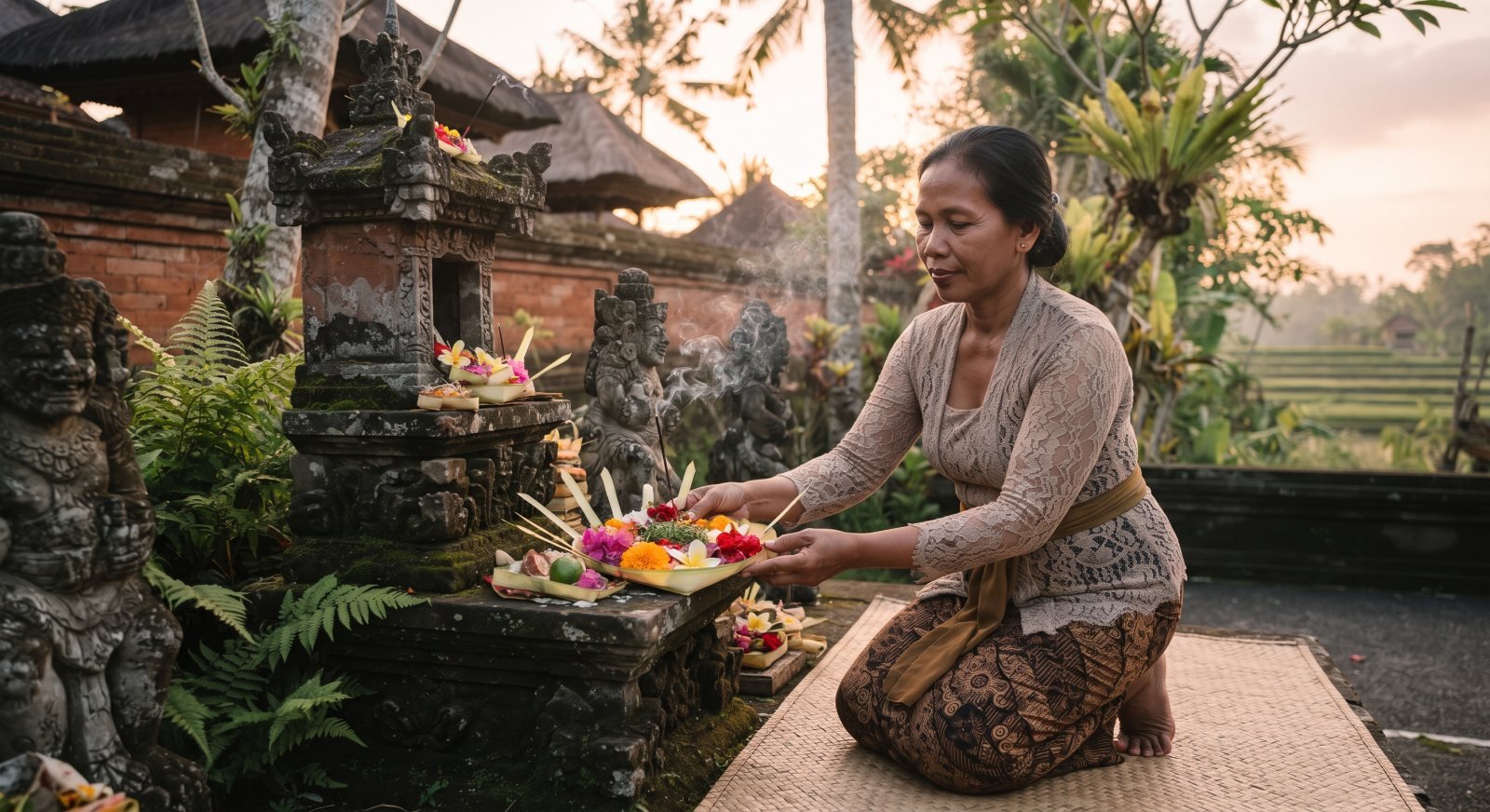
Walk through Kuta, Ubud or any village before breakfast and you will see them on doorsteps, car dashboards, shop counters and shrines: small square trays woven from coconut palm leaves, filled with flowers and a stick of incense. These are canang sari, and placing them is one of the most constant habits of Balinese life.
What the name means
Canang comes from ca (beautiful) and nang (purpose); sari means essence. A canang sari is a small, beautiful gift that carries the essence of gratitude to God (Ida Sang Hyang Widhi Wasa) and the spirits. It is made with yadnya, sincere sacrifice: the time and care put into it matter more than its value.
What is inside
A typical canang sari contains:
- a tray (ceper or taledan) woven from young coconut leaf,
- a porosan: betel leaf, areca nut and lime, a symbol of the Hindu trinity,
- sliced banana leaf, sugar cane or a little rice, a cookie or sweet,
- shredded pandan leaves for fragrance,
- flowers in four colours, placed by direction,
- and finally a burning stick of incense and a few drops of holy water.
The colours and directions
Flowers are traditionally arranged by the cardinal directions and the deities that guard them:
| Direction | Colour | Deity |
|---|---|---|
| East | white | Iswara |
| South | red | Brahma |
| West | yellow | Mahadewa |
| North | blue or green | Wisnu |
Variations exist between villages, and families use what grows in their garden — but the idea of balancing all directions stays the same.
When offerings are made
Most households make offerings every morning after cooking, and many also in the evening. On special days — Kajeng Kliwon, full moon (purnama), new moon (tilem), Galungan and Kuningan — offerings become larger and more elaborate. Offerings on the ground (segehan) are for lower spirits and often include rice of different colours; you may see dogs eating them later, which is considered fine because the essence has already been received.
Etiquette for visitors
- Walk around offerings, not over them. If you step on one by accident, don't panic — a quiet apology is enough.
- Don't move or tidy offerings in hotel rooms or shops.
- Ask before photographing someone placing an offering, and keep your distance while they pray.
- Many markets sell ready-made canang; buying one for your villa's shrine (with your host's guidance) is a kind gesture.
See them being made
The best places to understand offerings are local markets early in the morning, such as Badung Market in Denpasar, and family compounds you visit with a guide. Our Denpasar heritage tour includes market stops where you can watch women weave palm leaves at incredible speed.
General information, reviewed periodically. Rules and prices in Bali change — check official sources before you travel or invest.
Keep reading
All articles →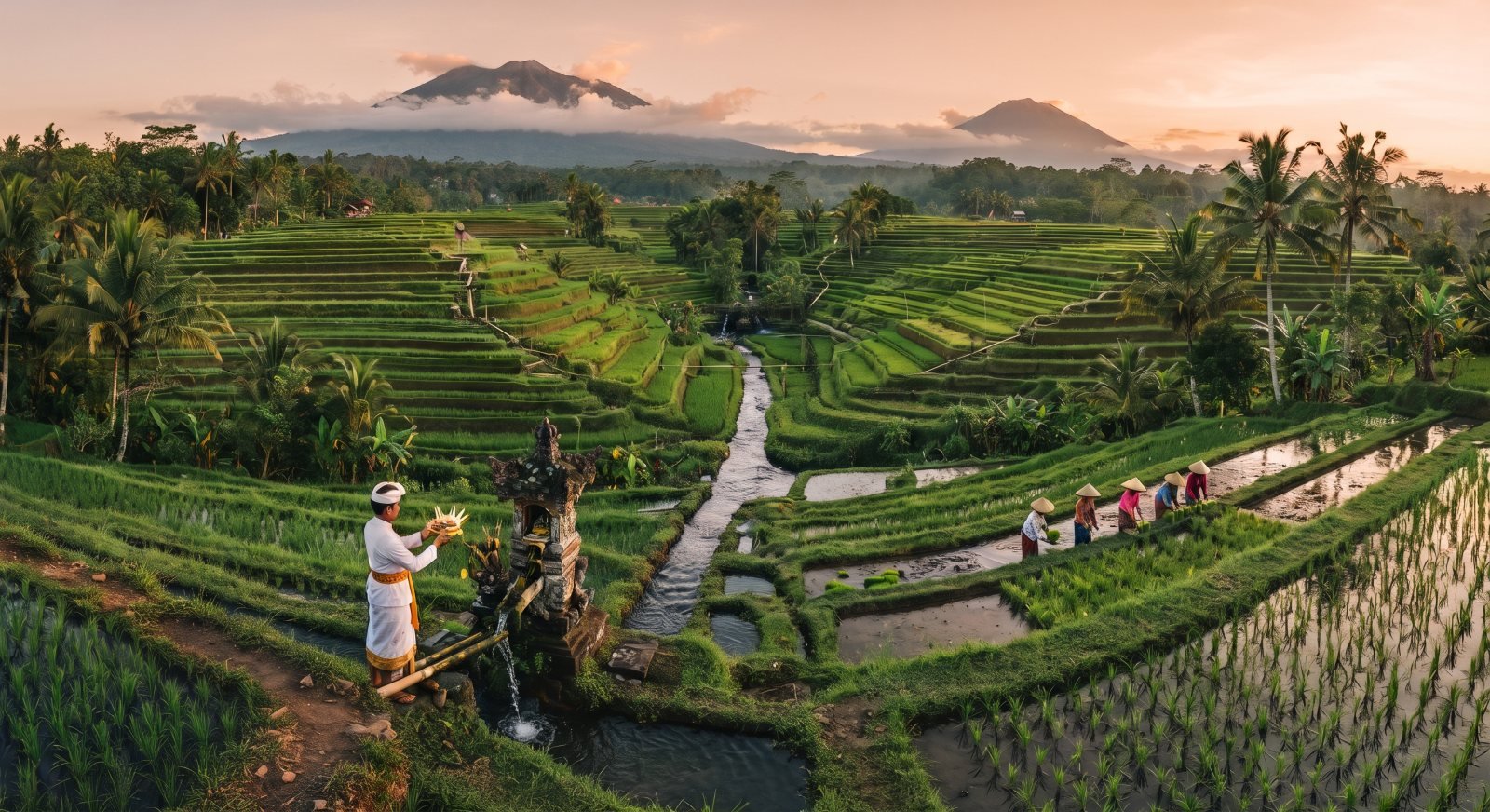 Art & Culture
Subak: Bali's 1,000-year-old rice terraces and water temples
The green staircases of Tegallalang and Jatiluwih are not just pretty — they are run by a democratic water system linked to temples. How su…
 Art & Culture
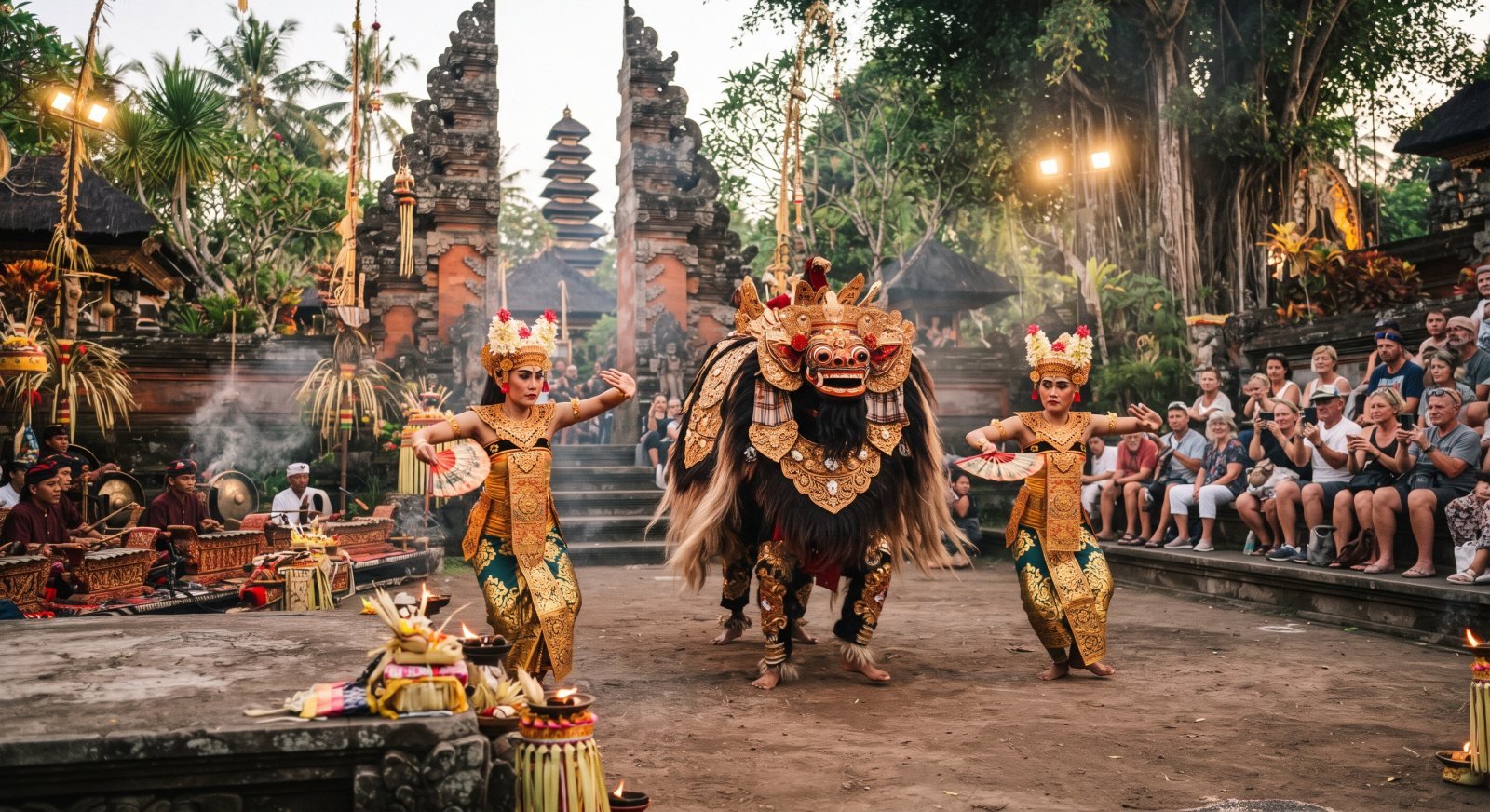
Kecak, Legong and Barong: a guide to Balinese dance
Which Balinese dance should you watch, and where? The stories behind Kecak, Legong and Barong, the gamelan that drives them, and how to cho…
 Art & Culture
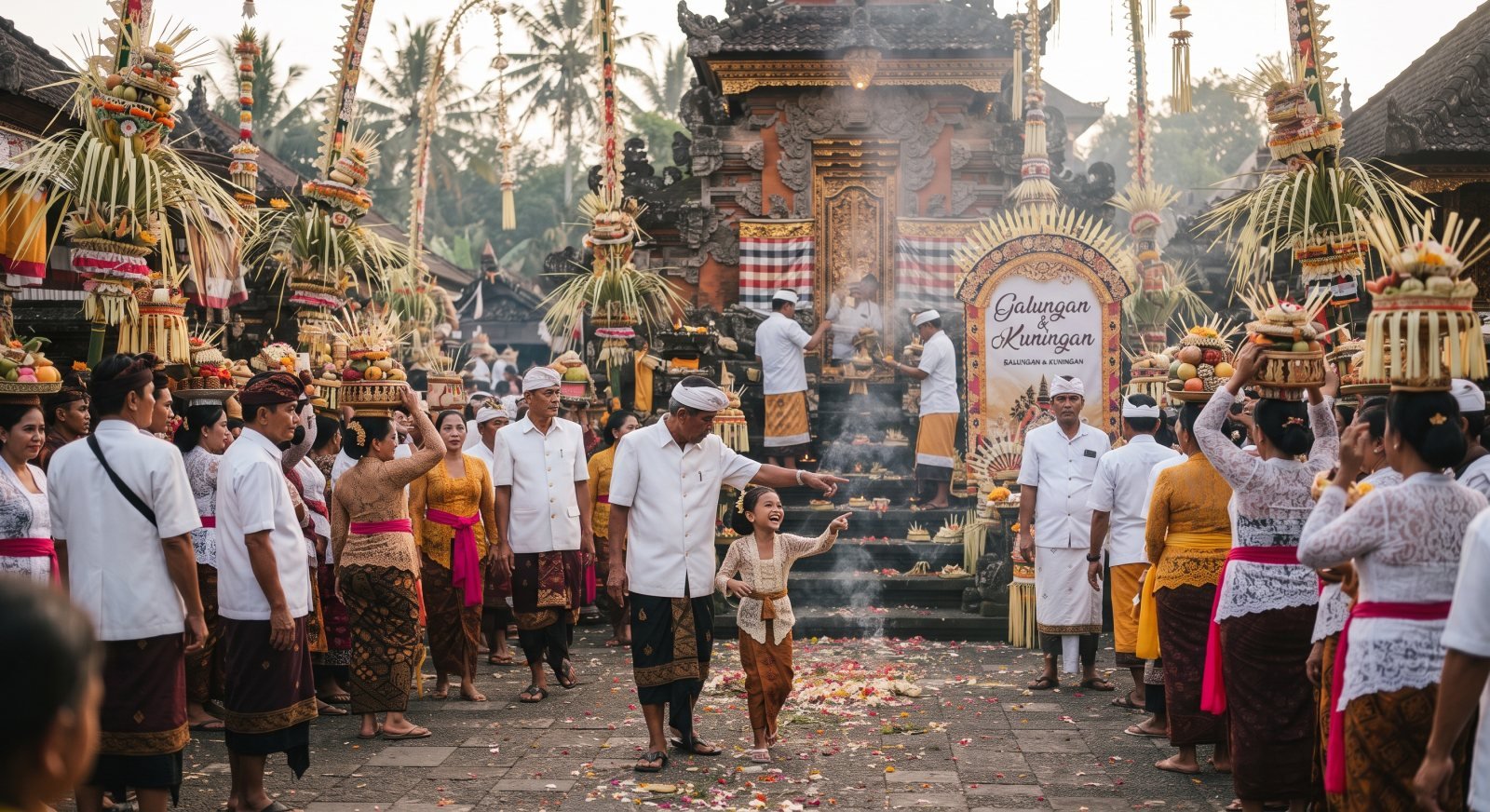
Galungan and Kuningan: when bamboo arches line every road in Bali
Every 210 days Bali celebrates the victory of dharma over adharma. Tall decorated bamboo poles appear outside every home — here is what Gal…